Community Dynamics Shaping Retention in Instant Web-Based Multiplayer Hybrids
Paul Patterson · Jul 29, 2026
Community Dynamics Shaping Retention in Instant Web-Based Multiplayer Hybrids
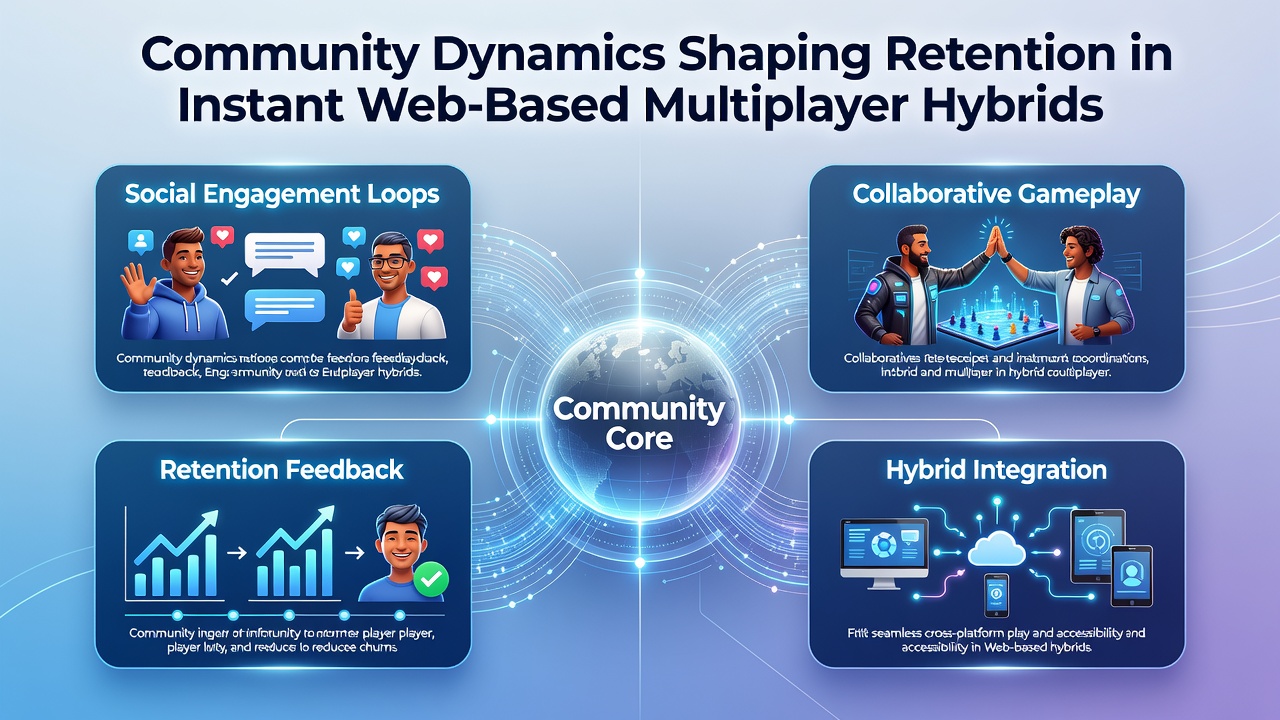
Community dynamics in instant web-based multiplayer hybrids drive retention through layered social structures that emerge when players blend genres such as strategy, racing, and puzzle elements in no-install sessions, and researchers tracking these patterns note how shared objectives create feedback loops that extend average playtimes across distributed user bases.
Social Bonding Mechanisms in Hybrid Environments
Players form temporary alliances during cross-genre matches where racing segments transition into cooperative puzzle resolutions, and data collected from platform analytics in early 2026 shows these bonds correlate with repeat login rates that climb when participants recognize familiar usernames from prior rounds. Observers tracking browser-based clusters report that voice chat integrations and quick emote systems accelerate trust building, while session logs reveal groups that coordinate strategies across multiple rounds maintain presence longer than solitary participants do.
Group Formation and Role Specialization
Instant access to hybrid titles allows rapid role assignment within ad-hoc teams, such as one player handling navigation while another manages resource allocation during combined action-strategy sequences, and studies from academic institutions indicate these specializations reduce early drop-off because individuals perceive their contributions as essential to collective success. In July 2026 platform reports highlighted that hybrids supporting persistent team rosters across browser tabs experienced measurable increases in weekly retention metrics compared to purely competitive formats.
Turns out the integration of real-time leaderboards tied to community milestones further reinforces these groups, because visible progress shared among participants encourages return visits to defend or improve collective standings.
Moderation and Feedback Loops Supporting Persistence
Effective community moderation in web-based hybrids relies on automated tools supplemented by player-elected stewards who address disruptive behavior during live sessions, and figures from industry monitoring services demonstrate that environments with responsive oversight sustain higher concurrent user numbers over extended periods. Researchers have observed that transparent rule enforcement combined with player suggestion channels creates cycles where satisfied users recruit newcomers, expanding the active base without proportional increases in churn.
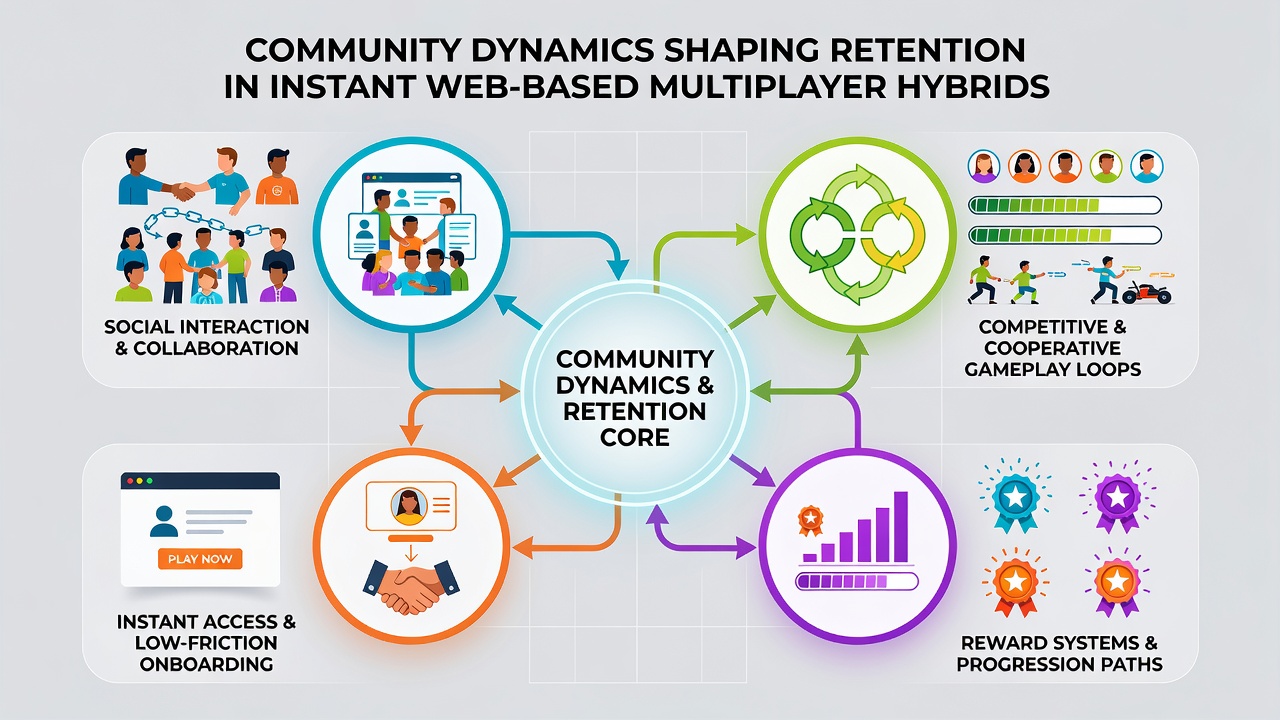
What's interesting is how seasonal community events scheduled around mid-year updates prompt coordinated participation spikes, with participation data revealing sustained engagement extending well beyond the event window when participants feel ownership over the shared space. A report issued by the Entertainment Software Association links these structured interactions to retention patterns observed across North American user samples.
Cross-Platform Community Spillover Effects
Hybrid titles hosted in browser environments often intersect with external forums and social media channels where strategies and replays circulate, and analysts examining these connections find that players who engage outside the core application demonstrate extended lifetime values because external discussions keep the experience salient between active sessions. Data patterns compiled through university-led surveys in multiple regions confirm that communities fostering knowledge sharing across genres reduce barriers for new entrants while rewarding veterans with recognition systems.
Yet retention gains depend on seamless transitions between in-game and out-of-game spaces, because fragmented communication channels can fragment groups that otherwise would consolidate around recurring hybrid formats.
Longitudinal Retention Indicators
Long-term tracking of hybrid multiplayer cohorts shows community density metrics, including message volume per session and cross-player assistance rates, predict continuation rates more reliably than isolated performance scores alone, according to aggregated platform telemetry examined by independent research groups. In one documented case series, titles emphasizing collaborative hybrid mechanics retained 18 percent more monthly active users when community features received iterative updates based on player input.
Conclusion
Community dynamics continue to shape retention outcomes in instant web-based multiplayer hybrids through interconnected social, moderation, and spillover processes that researchers continue to quantify across expanding datasets, and ongoing monitoring through mid-2026 underscores how these elements interact to sustain player populations in genre-blended browser environments. Evidence from multiple sources indicates that platforms prioritizing these dynamics maintain stronger engagement trajectories than those focused solely on mechanical innovation.