Decoding Reward Structures That Promote Genre Switching in Quick Access Digital Game Collections
Paul Patterson · Jul 11, 2026
Decoding Reward Structures That Promote Genre Switching in Quick Access Digital Game Collections
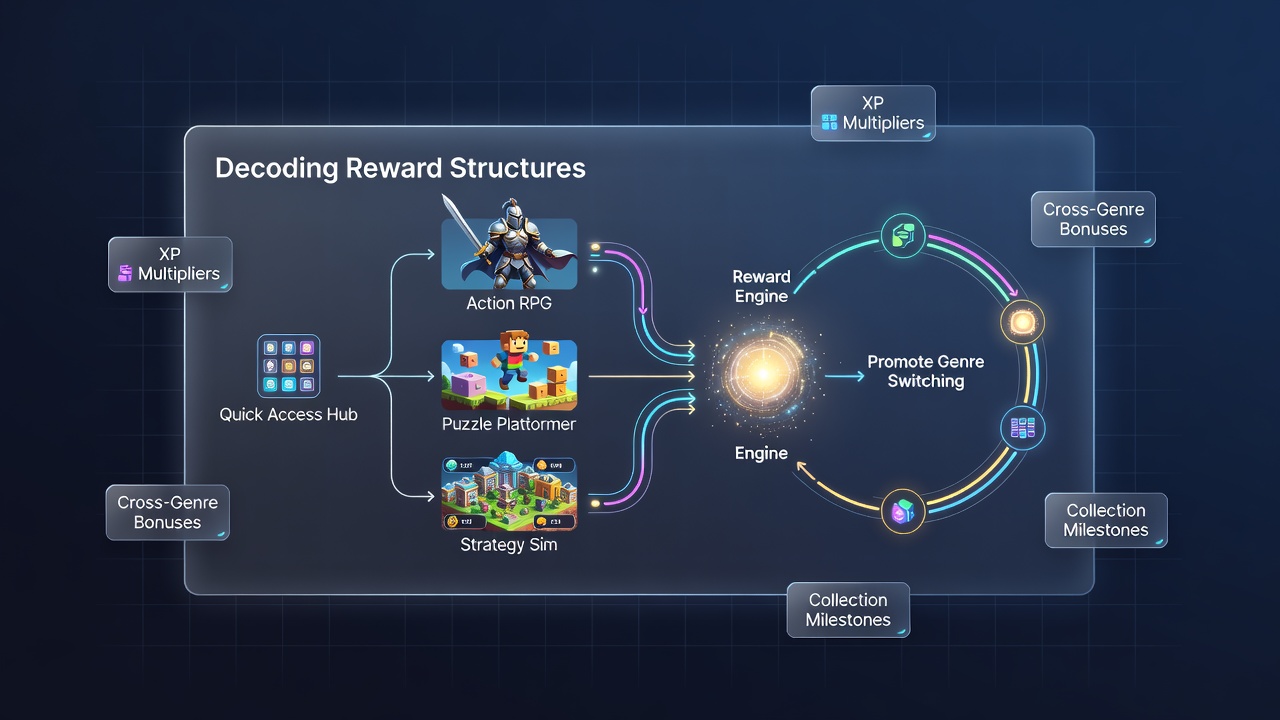
Quick access digital game collections consist of browser-based platforms and no-install libraries that let users launch titles across multiple genres within seconds, and reward structures within these systems often tie progression across different categories to encourage players to move between them. Developers implement shared currencies, cross-genre achievements, and tiered badge systems that accumulate value only when participants complete tasks in varied formats, according to industry analyses from 2025 and early 2026.
Core Components of Cross-Genre Reward Design
Shared progression meters track activity in puzzle, action, and strategy entries simultaneously, while bonus multipliers activate when users complete sequences that alternate between at least two genres during a single session. Data from platform operators shows these meters increase average session length by linking daily login rewards to genre diversity rather than repetition within one category. Researchers at the University of Alberta documented similar patterns in a 2024 longitudinal study where participants exposed to multi-genre challenges recorded higher retention rates than those limited to single-genre tracks.
Implementation Patterns Observed in 2026 Platforms
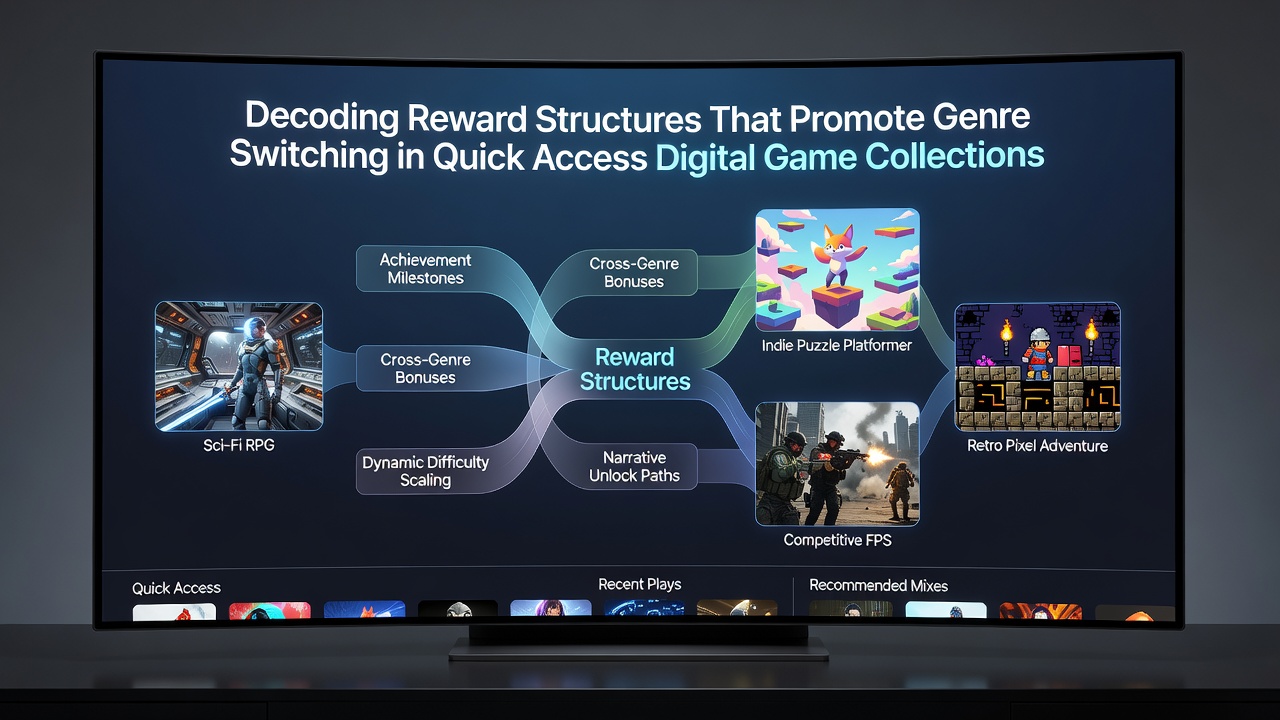
Collections updated through July 2026 frequently deploy event calendars that rotate required tasks across genres, such as completing a racing segment to unlock puzzle modifiers or finishing strategy objectives to earn shooting power-ups. These calendars reset weekly and tie visual indicators to a central hub, allowing players to see remaining switches needed for tier advancement. External reports compiled by the Entertainment Software Association indicate that collections using such calendars recorded measurable upticks in cross-genre play volume during the first half of 2026 compared with static reward lists.
Player Behavior Metrics and Switching Triggers
Telemetry logs reveal that reward thresholds set at intervals of three to five genre transitions per week correlate with sustained engagement, whereas thresholds below two transitions show diminishing returns after initial weeks. Observers note that visual progress bars displaying partial completion toward a multi-genre goal prompt additional switches even when the immediate reward value remains constant. A separate analysis released by the Canadian Interactive Digital Entertainment Association in late 2025 found that collections displaying real-time switching statistics alongside personal totals produced higher voluntary genre exploration than those omitting comparative data.
Technical Mechanisms Supporting Seamless Transitions
Backend architectures maintain unified player profiles that carry forward earned items and statistics regardless of the active title, eliminating the need to restart progress when switching. API calls between titles exchange small data packets that update reward status without requiring full reloads, and this design reduces friction that might otherwise discourage movement between genres. Platform documentation from several major operators confirms that such lightweight synchronization became standard practice by mid-2026, coinciding with broader adoption of unified account systems.
Comparative Outcomes Across Different Reward Models
Collections relying solely on genre-specific rewards demonstrate lower rates of voluntary switching, while those incorporating at least one shared economy element show increased movement between categories within the first month of user activity. Figures released by the Interactive Games and Entertainment Association of Australia in 2025 highlighted that hybrid models combining both approaches yielded the most consistent cross-genre participation over extended periods. These patterns hold across free-to-access browser collections where entry barriers remain minimal.
Conclusion
Reward structures that promote genre switching in quick access collections operate through shared metrics, rotating tasks, and unified profiles that reduce barriers between titles. Data collected through 2026 continues to map how these elements influence player distribution across genres, and platform operators adjust thresholds and visual cues in response to observed telemetry. Continued monitoring of these systems provides further insight into how reward architecture shapes navigation within instant-access environments.