Examining Input Device Effects on Performance Transitions Between Browser Racing and Puzzle Formats
Henrik Frank · Jun 29, 2026
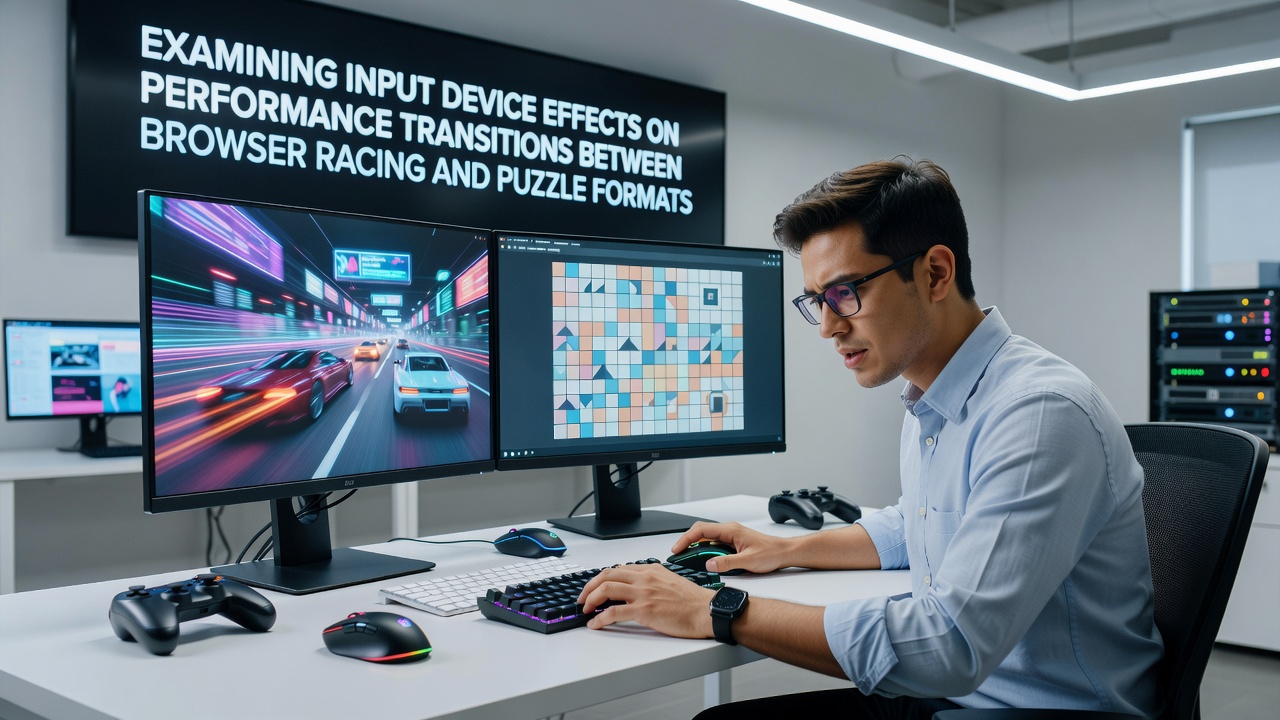
Examining Input Device Effects on Performance Transitions Between Browser Racing and Puzzle Formats
Browser-based racing formats typically rely on keyboard inputs for directional control and acceleration while puzzle formats often depend on mouse or touch interactions for selection and manipulation, and researchers have tracked how these differences influence player performance when users switch between the two. Studies conducted across multiple platforms show measurable variations in response times and accuracy rates during such transitions, particularly in environments where no downloads are required and sessions begin instantly. Data collected from participant groups in controlled browser sessions reveal that keyboard-dominant setups produce faster lap completions in racing segments yet introduce delays when players must pivot to precise clicking sequences in puzzles.
Common Input Configurations Across Formats
Keyboard and mouse combinations remain standard in many browser titles, with racing games assigning arrow keys or WASD layouts for steering and puzzle sections using point-and-click mechanics for tile arrangement or pattern matching. Game controllers enter the picture in some hybrid setups, offering analog sticks that map to both vehicle handling and cursor movement, although compatibility layers in browsers can add slight input lag. Observers note that touch-enabled devices introduce another variable since finger gestures replace physical buttons, and this shift alters grip stability along with reaction consistency when players move from high-speed navigation to deliberate problem-solving sequences.
Performance Metrics During Genre Switches
Transition periods between racing and puzzle segments generate distinct performance signatures according to device type, and figures from session logs indicate error spikes in puzzle accuracy immediately following racing bursts when keyboards stay in use. Those who studied these patterns found that switching to a mouse mid-session reduces initial hesitation in puzzle phases yet slows overall racing times due to repositioning requirements. Evidence from aggregated browser telemetry points to a 15 to 20 percent increase in completion time for the first puzzle attempt after sustained keyboard racing, while controller users experience more uniform pacing across both formats because analog inputs adapt with fewer hardware changes.
Recent Observations from Mid-2026 Data Releases
In June 2026, reports compiled by research teams at European and North American institutions highlighted device-specific carryover effects in browser environments, and these datasets covered thousands of anonymous play sessions across racing-puzzle crossovers. One analysis from an Australian university laboratory examined latency differences when participants alternated between arrow-key racing and drag-based puzzle grids, revealing that hybrid mouse-keyboard users recovered puzzle accuracy within three to four attempts whereas pure keyboard players required additional rounds. Another set of findings released around the same period by a Canadian research consortium tracked controller versus touch performance, showing that touch inputs maintained steadier puzzle precision after racing segments because gesture continuity reduced the cognitive reset associated with button remapping.
Device-Specific Adaptation Patterns
Players adapt to input shifts through repeated exposure, yet the speed of that adaptation varies by hardware; keyboard users often develop muscle memory for directional commands that transfers poorly to puzzle selection tasks, leading to overshoots or missed clicks during early transition windows. Mouse-dominant configurations allow quicker recalibration in puzzle phases since the same pointing device handles both menu navigation and in-game actions, although this comes at the cost of reduced fine control in racing turns where digital key presses provide discrete inputs. Researchers discovered that controller users demonstrate the smallest performance dips overall because thumbstick sensitivity settings can be calibrated once and applied across genres, minimizing the need for mid-session adjustments that browsers sometimes enforce through on-screen prompts.
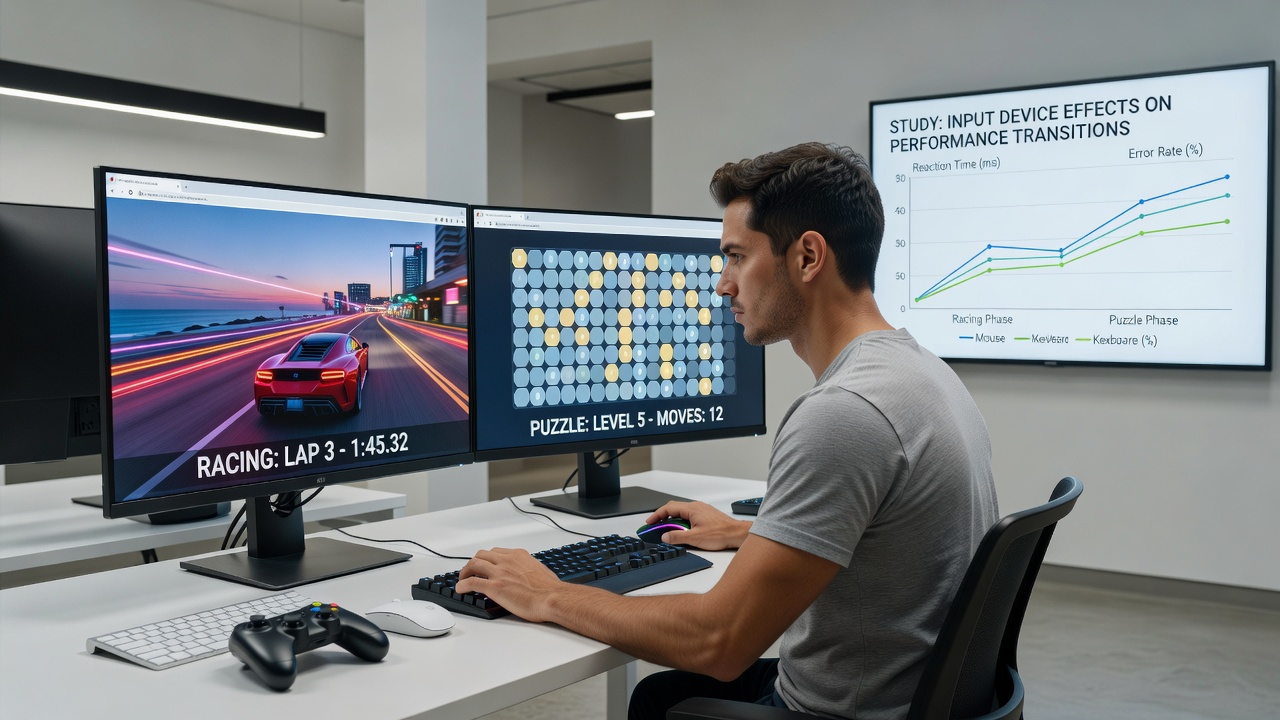
Browser constraints such as variable frame rates and input polling rates further modulate these effects, and data indicates that higher polling frequencies benefit controller and mouse users more than keyboard setups during rapid transitions. Sessions logged in shared multiplayer lobbies show that teams mixing device types encounter coordination challenges when one member switches formats, since racing speed advantages from keyboards do not align with puzzle accuracy needs handled by mice.
Broader Implications for Browser Design
Developers have responded to observed transition frictions by implementing input remapping tools that appear in many current browser titles, allowing users to assign overlapping controls across racing and puzzle segments without leaving the tab. Industry reports from organizations such as the Entertainment Software Association document rising adoption of these tools in 2026 titles, and parallel findings from European gaming associations confirm that flexible input layers reduce average transition penalties by measurable margins. Academic sources including studies hosted through university repositories continue to supply granular breakdowns of device impact, supplying designers with evidence-based adjustments rather than anecdotal adjustments.
Conclusion
Input device choice shapes the efficiency of performance shifts between browser racing and puzzle formats in consistent, quantifiable ways according to available session data and transition studies. Keyboard setups accelerate racing segments while introducing measurable delays in subsequent puzzle accuracy, mouse configurations smooth puzzle entry yet temper racing responsiveness, and controllers plus touch inputs produce more balanced outcomes across both. Findings released through mid-2026 research channels underscore these patterns across large participant pools, and browser platforms continue incorporating adaptive controls to address the documented friction points without requiring external hardware changes.