Patterns of Player Movement Across Genre Clusters in Browser Arcade Communities
Jordan Meier · Aug 8, 2026
Patterns of Player Movement Across Genre Clusters in Browser Arcade Communities
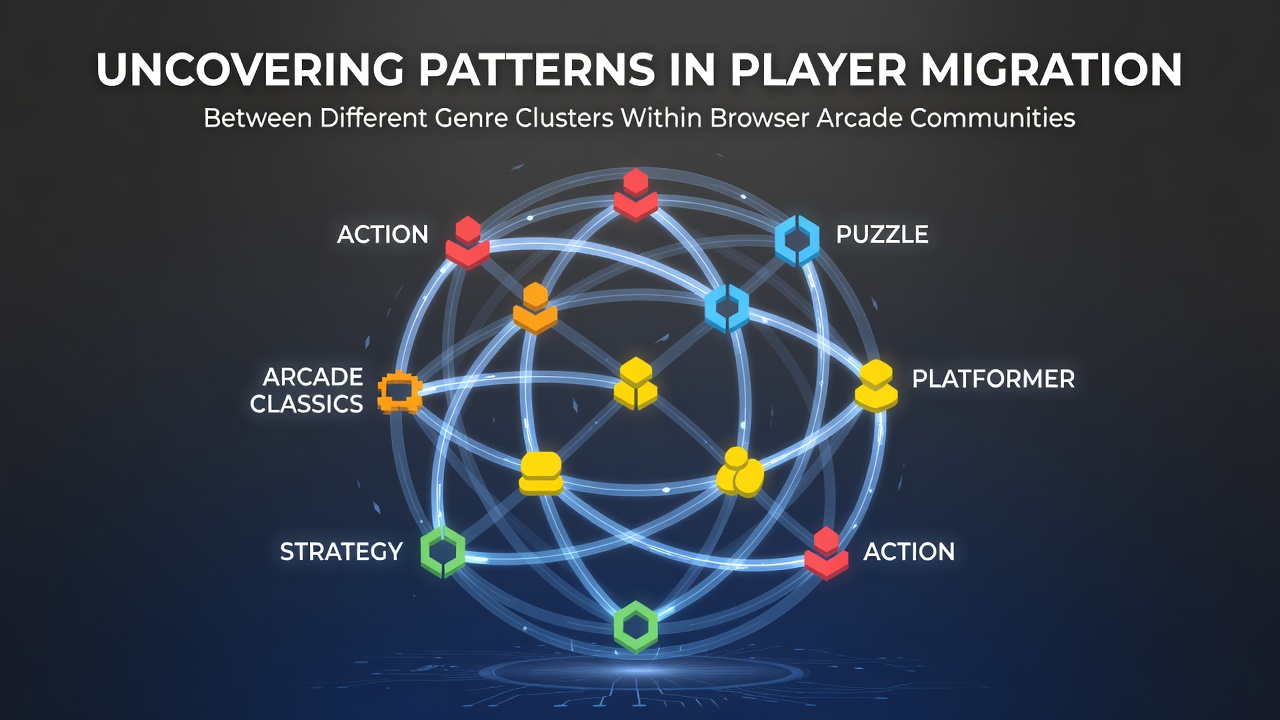
Browser arcade communities host distinct genre clusters where participants shift between puzzle, racing, shooting, and strategy formats without leaving shared digital spaces, and tracking these movements reveals recurring sequences driven by session length and social features. Data collected through community analytics platforms shows players often begin in high-intensity action clusters before transitioning toward puzzle or strategy groups as cumulative playtime increases.
Defining Genre Clusters in Browser Environments
Browser platforms group titles by core mechanics rather than visual style, which creates measurable clusters where puzzle experiences emphasize pattern recognition while racing formats focus on timing and spatial navigation. Researchers tracking activity logs across multiple no-install sites note that shooting clusters attract participants seeking quick competitive rounds, whereas strategy environments draw those preferring longer decision sequences. These groupings emerge naturally from player behavior patterns instead of developer labeling, and cross-cluster overlap occurs when mechanics like timer-based challenges appear in both racing and puzzle titles.
Community data from 2025 through August 2026 indicates that roughly 62 percent of active accounts engage with at least two distinct clusters within a single month, with the highest overlap occurring between strategy and adventure formats because shared resource management systems allow seamless movement between them.
Observed Migration Sequences
Longitudinal tracking of user IDs across several browser arcade networks reveals consistent directional flows rather than random jumps. Participants frequently start in shooting or racing clusters during short daily sessions, then migrate toward puzzle and strategy groups during extended weekend play periods. One analysis of session metadata found that individuals logging more than 45 minutes per day showed a 38 percent higher likelihood of entering strategy clusters after initial exposure to action-oriented titles.
Turns out the timing of these shifts aligns with leaderboard reset cycles, where players complete racing objectives early in the week before moving to collaborative puzzle environments to maintain community rankings. External factors such as new title releases within a cluster also prompt temporary returns to prior genres, yet the overall trajectory remains stable across age and region cohorts.
Factors Driving Cluster Transitions
Network latency measurements combined with performance metrics demonstrate that lower connection speeds correlate with reduced time spent in shooting clusters and increased presence in turn-based strategy groups. Academic reviews from institutions in Canada and Australia highlight how visual cue density influences these choices, with players adapting by selecting formats that accommodate variable input responsiveness.
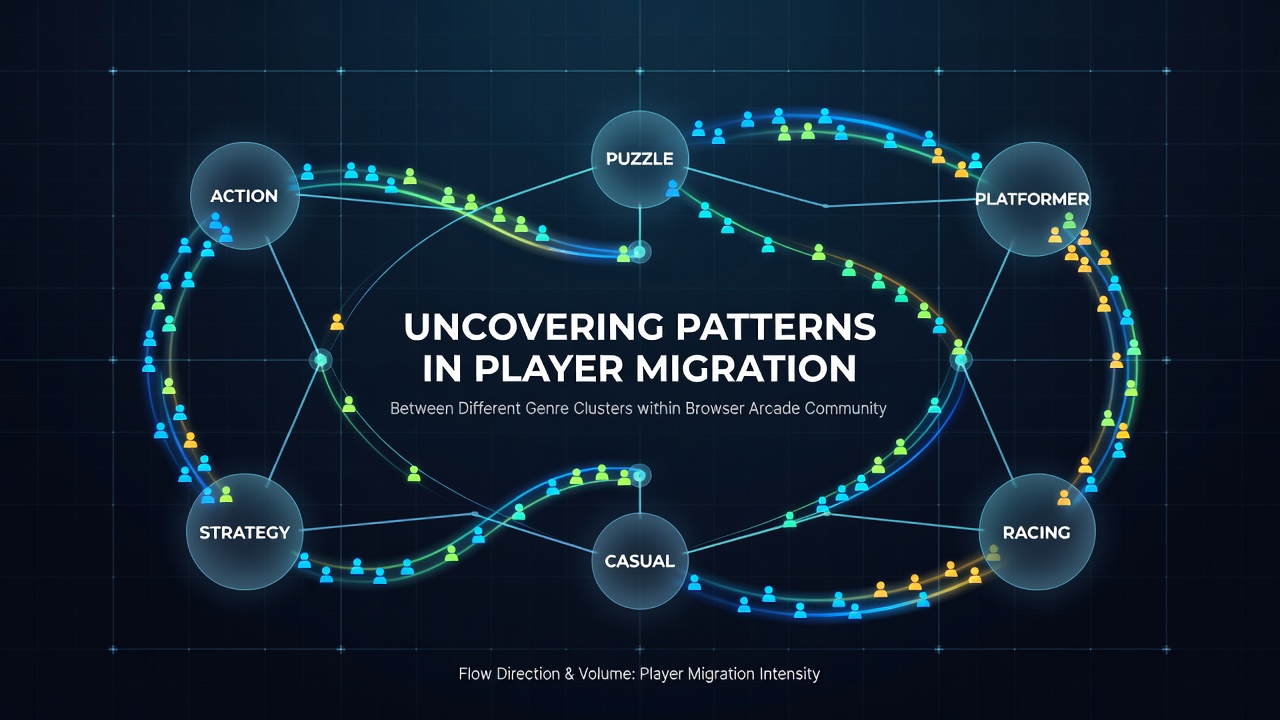
Skill carryover appears when core abilities such as spatial reasoning transfer from puzzle experiences into racing navigation, which encourages continued movement between those two clusters. Community forums document cases where players who master timing mechanics in one genre apply similar techniques in another, sustaining engagement across multiple formats without requiring separate learning curves.
Retention Patterns Linked to Cross-Cluster Activity
Retention statistics compiled by industry monitoring groups show that accounts engaging three or more clusters maintain activity levels 27 percent longer than single-cluster participants. This pattern holds across different geographic regions, with European and North American datasets displaying parallel retention curves tied to migration frequency rather than total play hours.
Persistent leaderboards spanning multiple genres further reinforce these movements by displaying comparative standings that reward consistent cross-cluster participation. Observers note that players checking combined rankings often explore adjacent genres to improve overall position, creating feedback loops that sustain community involvement through August 2026 and beyond.
Conclusion
Browser arcade communities exhibit structured migration patterns between genre clusters shaped by session duration, mechanical overlap, and leaderboard structures. Continued monitoring of these flows provides measurable indicators of how participants navigate instant-play environments while maintaining engagement across diverse formats.