Quest Layering Techniques in Browser Strategy and Adventure Games
Jordan Schmid · Jun 6, 2026
Quest Layering Techniques in Browser Strategy and Adventure Games
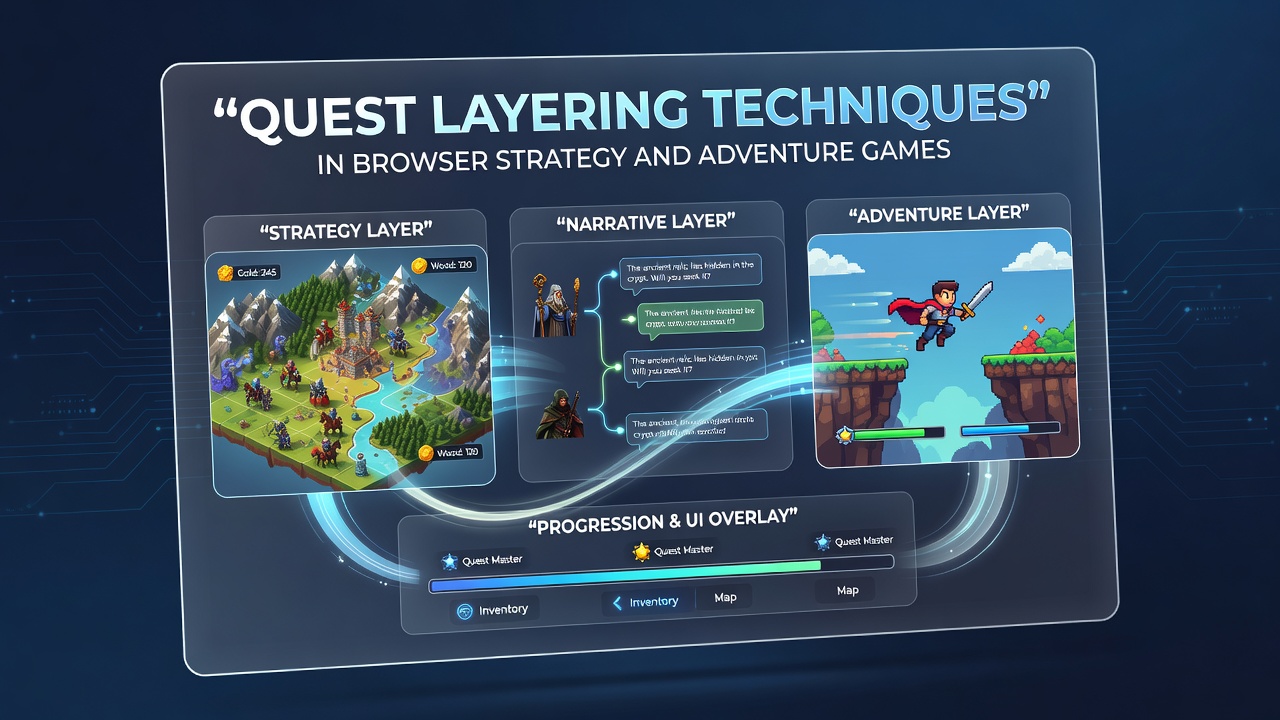
Quest layering in browser strategy and adventure games refers to the structured nesting of objectives where primary goals contain multiple secondary and tertiary tasks that players uncover through progression and decision points, and developers design these systems to run efficiently within web browsers using JavaScript frameworks and real-time data synchronization. Players encounter an initial mission that branches into sub-objectives which themselves contain hidden parameters or conditional triggers, creating depth without requiring downloads or installations. Data from industry reports shows browser game sessions incorporating layered quests often extend average playtime by integrating narrative elements with resource management loops.
Core Components of Layered Quest Design
Developers build quest layers around modular objectives that activate sequentially or concurrently based on player actions, whereas strategy titles layer resource allocation tasks beneath overarching campaign goals and adventure games embed exploration checkpoints within story arcs. These layers operate through event listeners that track completion states across browser sessions, allowing persistence via local storage or server-side accounts. Researchers at academic institutions have documented how such systems reduce cognitive load by presenting information in stages, yet they maintain engagement through escalating complexity that rewards repeated logins.
One technique involves conditional unlocking where completion of a base layer reveals optional branches tied to specific variables like inventory items or alliance formations, and this approach appears frequently in multiplayer strategy environments hosted on web platforms. Another method uses time-sensitive overlays that introduce daily or weekly sub-quests which feed into longer campaign arcs, ensuring players return to the browser tab at regular intervals without disrupting core gameplay flow.
Implementation in Strategy Genres
Strategy games on browser platforms apply quest layering by connecting tactical decisions to multi-tier objectives such as territory expansion goals that contain logistics sub-tasks and diplomatic negotiation layers, while players manage these elements through interface panels that update dynamically. According to a report from the Entertainment Software Association, browser strategy titles with integrated layering mechanics saw increased user retention metrics during the first half of 2026, particularly around updates released in June that refined server handling for concurrent quest tracking. These designs often incorporate procedural generation for lower layers, generating unique sub-objectives based on map seeds or player history stored in cookies and databases.
Observers note that effective layering avoids overwhelming the limited screen space of browser windows by prioritizing visual hierarchy, where main quest markers remain prominent and sub-layers appear only upon interaction or tooltip activation. This creates a scalable framework suitable for both casual sessions and extended play, as evidenced in titles that blend real-time strategy elements with persistent world states.
Applications Within Adventure Formats
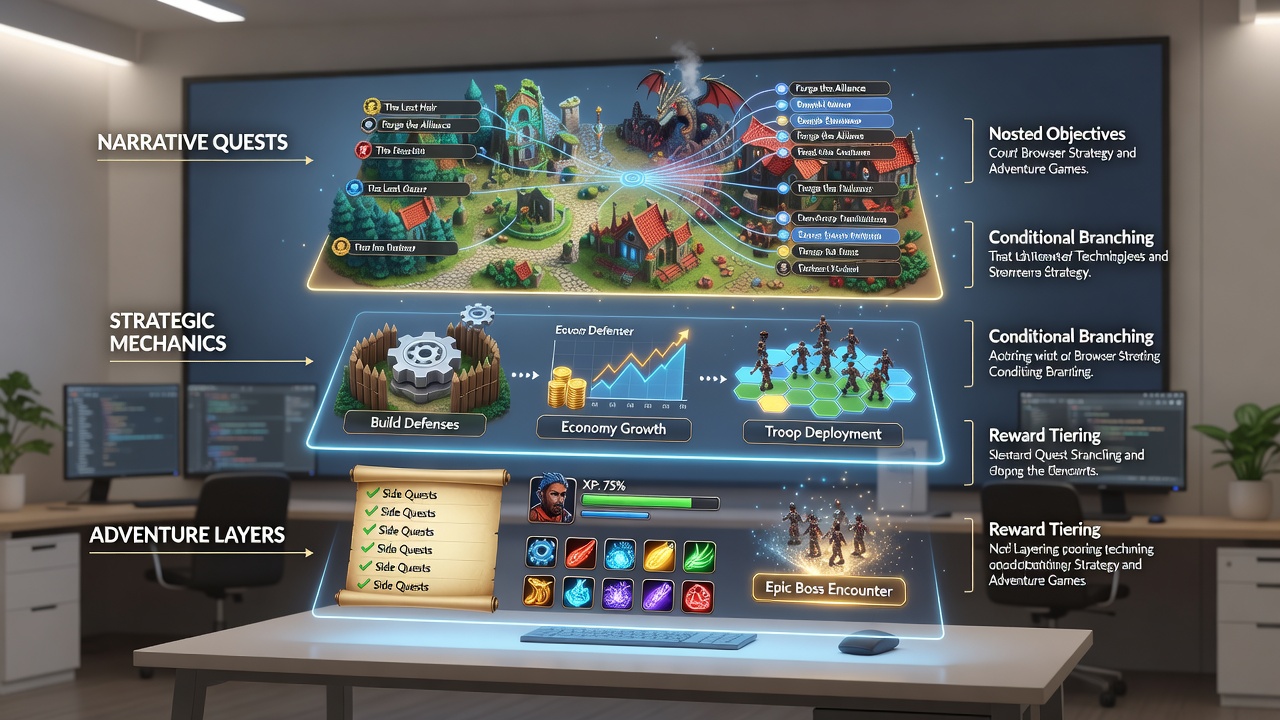
Adventure games utilize quest layering to weave narrative threads through environmental interactions and dialogue trees, where an initial exploration objective expands into puzzle resolutions and character backstory revelations that depend on prior choices. Browser implementations handle these layers via state machines that preserve progress across page reloads, enabling seamless continuation when users switch tabs or devices. Figures from European game development federations indicate adventure titles employing deep layering report higher completion rates for secondary objectives compared to linear structures.
Techniques here include dialogue-triggered revelations that retroactively add depth to earlier layers, along with inventory-based gating that encourages experimentation within constrained browser controls. Players discover hidden quest variants through repeated visits to locations, and these variants often tie into broader strategy crossovers when games incorporate light management systems alongside pure narrative progression.
Technical Considerations for Browser Environments
Browser constraints such as memory limits and variable network latency influence how developers structure quest data, leading to techniques that preload essential layer information while deferring optional branches until needed. WebAssembly modules increasingly support complex state calculations for layered systems, reducing reliance on server calls during active play. Studies from research institutions across North America and Australia highlight optimization patterns that maintain smooth performance even when multiple quest layers run simultaneously in a single tab.
Security practices involve validating quest progress on the server side to prevent client-side manipulation, and this becomes essential in competitive strategy scenarios where layered achievements contribute to leaderboards. Integration with HTML5 canvas elements allows visual feedback for layer completions without additional plugins, supporting cross-platform accessibility on desktops and mobile browsers alike.
Player Interaction Patterns and Retention Metrics
Analytics platforms tracking browser game usage reveal that layered quest systems correlate with distinct session behaviors, including shorter but more frequent visits when daily sub-layers are present alongside main campaigns. Those who engage deeply with tertiary objectives often exhibit stronger community participation through shared strategies and modded extensions where permitted by game terms. In June 2026 several major browser portals introduced analytics dashboards for developers to monitor layer-specific drop-off rates, aiding iterative refinements.
Cross-genre examples demonstrate how adventure narrative layers enhance strategic planning loops by providing context and motivation for resource decisions, while strategy frameworks supply tangible outcomes that advance adventure plots. This interplay supports sustained interest across diverse player demographics without requiring specialized hardware.
Conclusion
Quest layering techniques continue to evolve within browser strategy and adventure games through refinements in data handling and interface design, supported by ongoing industry reports and academic analyses. These methods enable rich gameplay experiences that fit within web delivery models while accommodating varied play styles and session lengths. Developers refine these approaches based on performance data and user interaction logs to sustain engagement across global audiences.