Responsive Algorithms Reshaping Real-Time Interactions in Multi-Genre Online Playgrounds
Henrik Frank · Sep 7, 2026

Responsive Algorithms Reshaping Real-Time Interactions in Multi-Genre Online Playgrounds
Adaptive algorithms operate at the core of many mixed-genre online play spaces, adjusting parameters such as difficulty scaling, matchmaking pairings, and content delivery based on continuous streams of player input data. These systems process metrics including session length, interaction frequency, and cross-genre performance shifts to maintain balanced engagement levels across puzzle, racing, strategy, and action elements within single browser-based sessions. Data from industry monitoring shows that platforms integrating these mechanisms recorded measurable increases in average concurrent users during the first half of 2026, with further stabilization noted through September of that year.
Core Mechanisms Driving Adaptation
Real-time feedback loops form the foundation of these algorithms, where machine learning models ingest live telemetry and output modifications to game rules or environmental variables without requiring player-initiated restarts. One implementation tracks how quickly users transition between shooting sequences and strategic planning phases, then recalibrates enemy spawn rates or resource availability accordingly. Researchers at several academic centers have documented that such adjustments reduce abrupt difficulty spikes by distributing challenge elements more evenly across blended formats.
Matchmaking protocols represent another active area, employing similarity scoring across multiple skill vectors rather than single-genre rankings. Players entering a session that combines racing navigation with puzzle resolution receive pairings based on prior performance in both domains, which studies indicate leads to more consistent team coordination outcomes. External reports from the Entertainment Software Association highlight that these layered matching approaches appeared in an increasing number of no-install titles throughout 2025 and into 2026.
Cross-Genre Data Integration Patterns
Algorithms gather separate data streams for each genre component and then synthesize them into unified adjustment signals. A racing segment might contribute velocity and collision data while an overlaid strategy layer supplies decision tree metrics, allowing the system to identify when one element dominates player attention and redistribute focus through subtle environmental cues. Observers note that this synthesis occurs within milliseconds, preserving the seamlessness expected in instant-play environments.
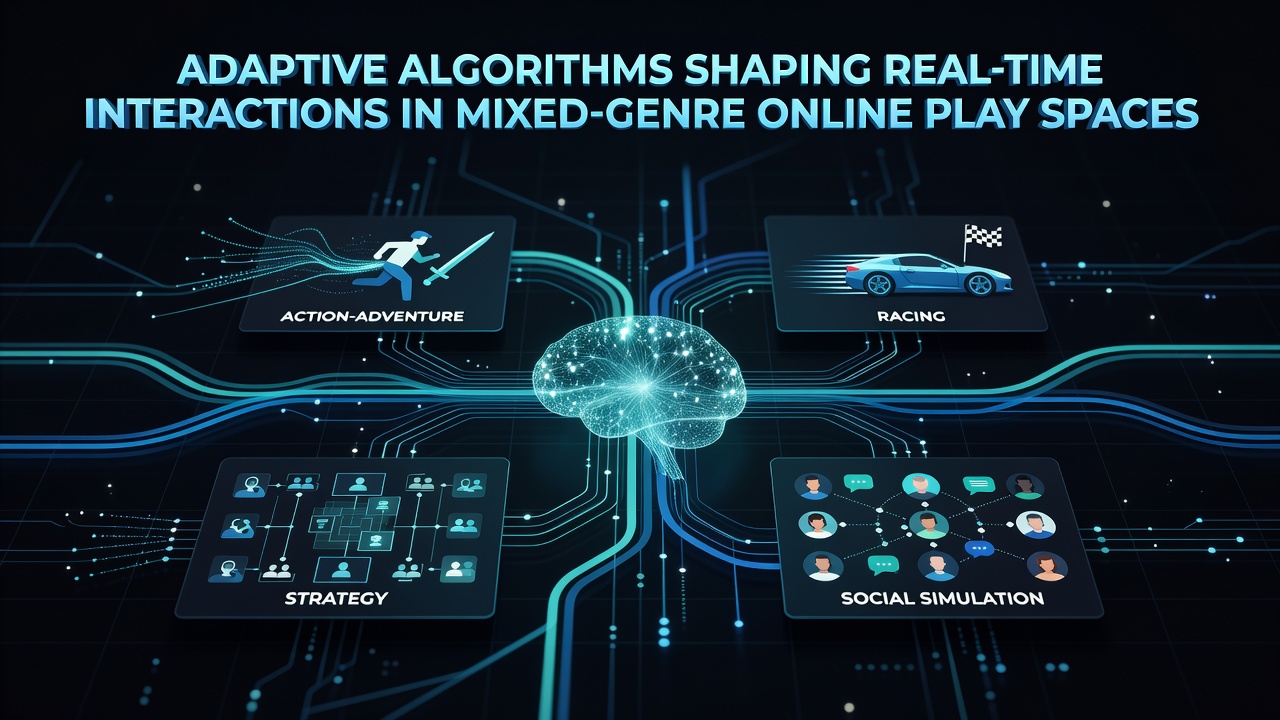
Performance carryover analysis forms a growing component of these models, where historical accuracy in puzzle-solving tasks informs predictions about strategy module success rates in the same session. Reports compiled by the Interactive Software Federation of Europe indicate that platforms applying carryover weighting observed steadier retention curves across multi-genre clusters compared with static rule sets. September 2026 updates to several major browser platforms incorporated refined weighting coefficients derived from aggregated regional play logs.
Latency and Network Variable Handling
Network fluctuations receive direct attention from adaptive layers that scale visual complexity or simplify physics calculations when connection quality drops below thresholds. These responses maintain interaction continuity by shifting emphasis toward less bandwidth-intensive genre elements, such as turning from action sequences to turn-based strategic choices during high-latency periods. Technical documentation from university-affiliated game labs shows measurable reductions in session abandonment when such compensatory routing activates automatically.
Visual cue calibration operates alongside these adjustments, with color contrast and icon prominence modulated according to detected player navigation patterns across genre boundaries. Systems record orientation success rates and adjust marker intensity to support quicker recognition of relevant elements in hybrid layouts, an approach validated through controlled testing at multiple research institutions.
Future Development Indicators
Current trajectories point toward deeper integration of predictive modeling that anticipates genre transition points before players initiate them. Early deployments in select environments already demonstrate reduced transition friction through preemptive resource reallocation. Government technology assessments from Canadian digital media programs and Australian interactive entertainment registries both reference ongoing evaluations of these predictive frameworks as of mid-2026.
Modular architecture continues to enable incremental additions of new genre components without full system overhauls, supporting the gradual expansion of mixed spaces while preserving algorithmic responsiveness. Industry conferences scheduled for late 2026 are expected to feature case studies detailing performance metrics from these modular implementations.
Conclusion
Adaptive algorithms continue to refine the operational backbone of mixed-genre online play spaces by processing diverse data inputs and generating targeted adjustments in real time. Their influence spans matchmaking, difficulty distribution, network compensation, and visual guidance across puzzle, racing, strategy, and action formats. Available figures from 2026 demonstrate sustained platform adoption and measurable effects on session stability, while ongoing research from academic and industry bodies tracks further refinements in predictive capabilities and modular design. These developments remain grounded in continuous telemetry analysis and iterative model updates rather than static configurations.